A student asked to meet with me three days in a row. I meant to see him each time, but I didn’t. Not because I didn’t care, but because things come up. They always do.
And if we’re being honest, the students who seem the strongest—the ones who don’t cause disruptions, who don’t demand attention—are often the ones who get pushed to the back burner. Sometimes you feel like they can wait.
Until they can’t.
The Conversation I Wasn’t Ready For
We finally met after the small group. I knew I’d have uninterrupted time, and I didn’t want to delay it again.
We’ve talked a lot, and he’s shared things that most students don’t. So when he sat down and asked: “Do you remember the thing I told you last year?” I paused. Not because I didn’t care—but because I didn’t want to assume. We’ve had a lot of conversations about a lot of different things.
I asked him to be more specific, and he was. There had been a recent death in his family. And ever since, something from a few years ago had been coming back, heavy on his mind.
As soon as he started talking, I knew exactly what he meant. And immediately, I felt it—that tension. Because now he had to say it again, and I made him wait to tell me about it.
When Language Isn’t There, Silence Makes Sense
He teared up. He wasn’t dramatic or loud. But he said, “I just want to stop thinking about it.”
I called it what it was—an abusive encounter. He shook his head and said, “It wasn’t abuse.” That’s when I realized he didn’t have the language to describe what happened properly.
To him, abuse meant:
• getting beat
• being forced
• stranger danger
What happened to him didn’t fit that definition, but I knew it did. And that gap—the space between what happened and what he could name—is where silence lives.
The Moment That Shifted Me
We talked about counseling. He resisted at first, as most kids do. Eventually, he opened up to the idea. I asked if we could involve his mom. He said yes. Then he asked me to be the one to talk to her. That’s trust, and it didn’t feel like a win. It felt like responsibility.
The Realization I Couldn’t Ignore
After seven years as a school counselor, this was the first boy who had disclosed sexual trauma to me.
One…In seven years.
In a building full of boys who regularly talk to me about random things.
I think what’s hard for me is that I didn’t come out about my own sexual abuse history until my mid-30s, so I feel like I’m here for them. I know those boys are out there, but they don’t come forward for many reasons, and that didn’t sit right.
Research suggests that around 1 in 10 children experience sexual abuse before age 18. In a school of 1,300 students, that means dozens—likely more—are carrying something they’ve never named.
So where are they? I can’t simply find them to help support them.
They’ve been in the building.
They’ve walked past me.
Sat in classrooms.
Laughed in hallways.
And stayed silent.
The Question That Stayed With Me
I kept thinking: What if he didn’t come back on the fourth day? What if I had delayed one more time? What if he decided “Never mind.” That’s when it became clear, this is about access to safety.
And I started asking a different question: How do we make it easier for boys to speak—before they decide not to?
Silence–Safety–Systems
That question led me somewhere simple—but uncomfortable: Silence isn’t the problem.
It’s the outcome.
And most of the time, it comes from two things:
- a lack of safety
- a lack of systems that support it
So instead of asking, “How do we get boys to open up?”
A better question is: “Have we built environments where it even makes sense for them to?”
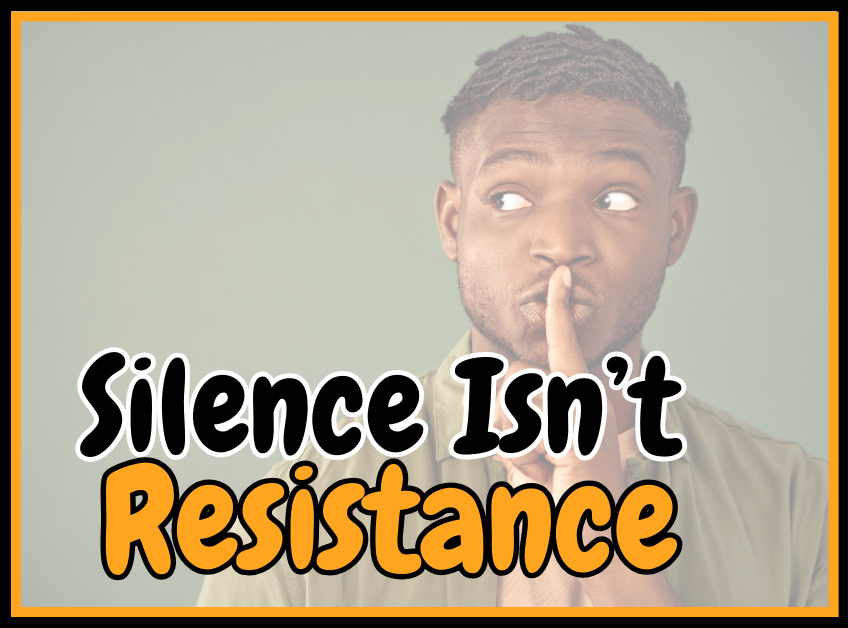
Silence Is Protection, Not Resistance
One shift changed how I see everything:
Silence isn’t avoidance. It’s protection.
If a boy doesn’t have the language, doesn’t trust the response, or has never seen what safe disclosure looks like. Then, silence is the most logical move he has.
We mislabel it all the time.
- We call it disengagement.
- Apathy.
- Defiance.
But often, it’s just a system working exactly as designed: Protect yourself. Don’t say it out loud. Keep moving.
Safety Is a Pattern, Not a Feeling
We talk about “safe spaces” as if they can be declared.
They can’t. Safety is something students experience over time. And boys aren’t listening to the words. They’re watching the response. They’re asking:
- Do you stay calm?
- Do you get loud?
- Do you rush in with questions?
Because if the adult looks overwhelmed, the body reads it instantly: Not safe. Safety isn’t built through speeches or posters. It shows up in: your tone, your pacing, your reactions, your consistency.
Students decide if you’re safe long before they decide to speak.
Systems Decide Who Speaks
This is where it shifts from individual to institutional. Disclosure isn’t just a moment; it’s an outcome of the system around it.
If students don’t have the language, they can’t name what happened. If “abuse” only means being hit, attacked, or overpowered, then coercion, manipulation, and inappropriate touch don’t register.
And if it doesn’t register, it doesn’t get said. That’s why Tier 1 isn’t just prevention—it’s access. Not as a lesson. As a language system. Students need words before they need help.
Making It Possible to Speak
The goal isn’t to get kids to talk. It’s to make it possible, and that requires restraint. Being honest about your role. Not promising confidentiality, you can’t keep. Staying regulated. Not turning disclosure into interrogation because the moment it feels like an investigation, silence comes right back.
What Happens After
Most students aren’t just afraid of the moment. They’re afraid of what comes next. They’ve seen what happens when someone speaks: things change, people whisper, attention shifts, and the message becomes: Talking makes things worse.
So the work isn’t just a response—it’s preserving the boys’ dignity and peace. We can’t ignore what happened, but we also can’t look at them like a lifelong wounded animal because healing doesn’t happen in intensity. It happens when we are predictable and calm to them.
That student trusted me. I still think about the ones who didn’t—the ones who almost said something, and decided not to. Not because they didn’t need help— but because the system didn’t feel ready for them.
And that’s the part that’s hard to sit with: Silence isn’t a student failure. Safety isn’t an individual responsibility. Systems are never neutral.
They either make it easier to speak— or easier to stay silent. So maybe the real question isn’t:
“Why don’t boys speak up?”
Have we built something worth speaking into? Because if we haven’t— Silence isn’t the problem. It’s the outcome.
-Charles


Leave a comment